Drawn on the Page
Illustrations that emerge from the CoNoggin Oat ground (#FBF9F6) — not placed on it, but part of it. A single technique works across all intensity levels: dissolve the white, keep the painting.
The Technique: Edge-Dissolve
The simplest approach won. No AI background removal needed — just maths. Convert near-white pixels to transparent with a feathered boundary, then composite on oat. The entire painting is preserved: tables, chairs, architecture, ground shadows, everything.
- Prompt for organic edges — "rough organic brushstroke edges that fade naturally into bare white paper at the margins"
- Luminance threshold — pixels above 242 luminance → transparent. Smooth 220–242 gradient zone.
- Gaussian feather — blur the alpha channel (18px radius) for soft, painterly transitions.
- Composite on Oat — alpha-composite onto #FBF9F6. Done.
Why Not AI Background Removal?
We tested BiRefNet v2 (state-of-the-art subject extraction). It works brilliantly for photos — but for illustrations, it strips elements it considers "background": tables, chairs, architecture, ground shadows. In one test, it removed the table from a diplomatic conversation scene, leaving tea cups floating in mid-air. In a watercolour illustration, everything painted IS the content. Edge-dissolve respects that.
The Full Pipeline
Total cost: ~$0.005/thumbnail · Total time: ~1.5s · $5 for 1,000 production-ready thumbnails on Oat ground
Results: Diplomatic Etiquette Course
All five intensity levels, same teal palette, same edge-dissolve technique. Subject: diplomatic etiquette — a realistic course topic for CoNoggin.
Pen & Wax Seal
30 seconds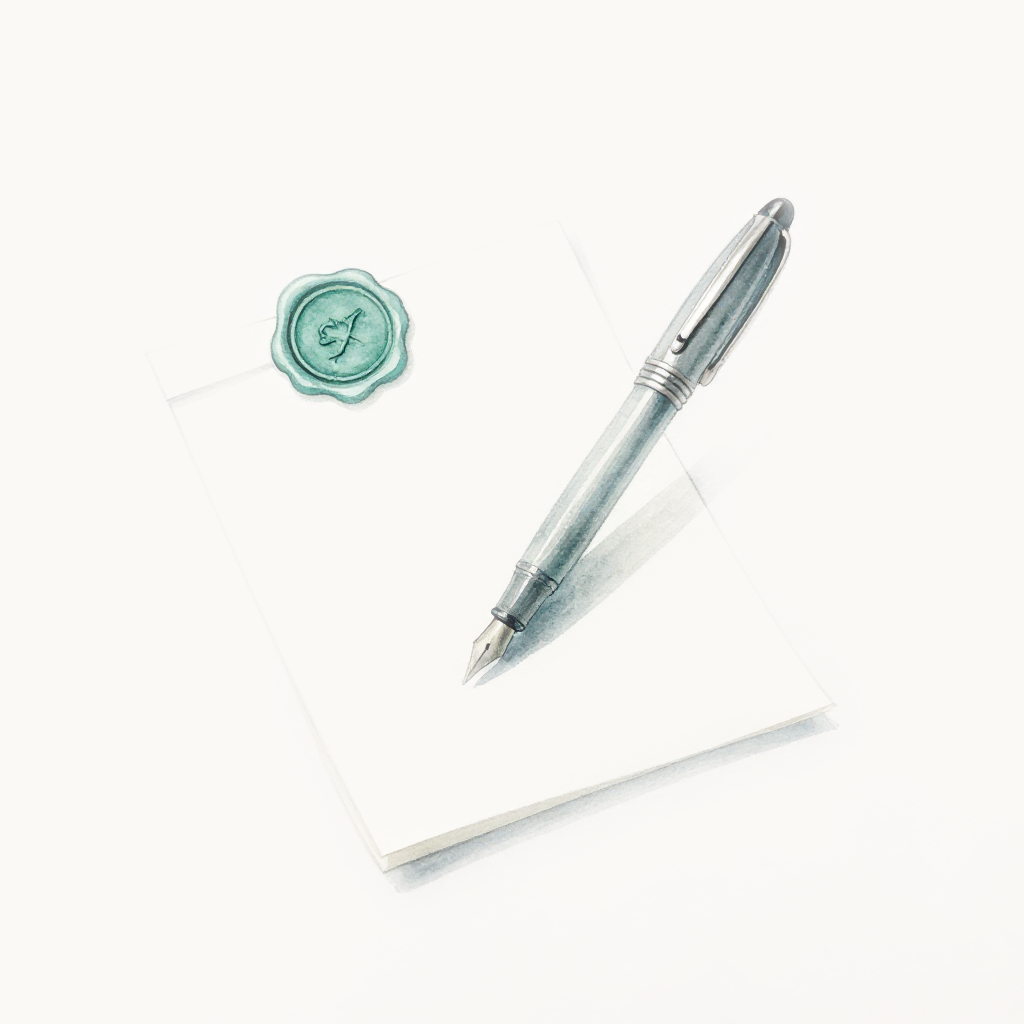
A fountain pen and teal wax seal floating on oat. The white note paper dissolves into the page — a happy accident that makes the illustration feel painted directly on the surface.
Business Card Exchange
2 minutes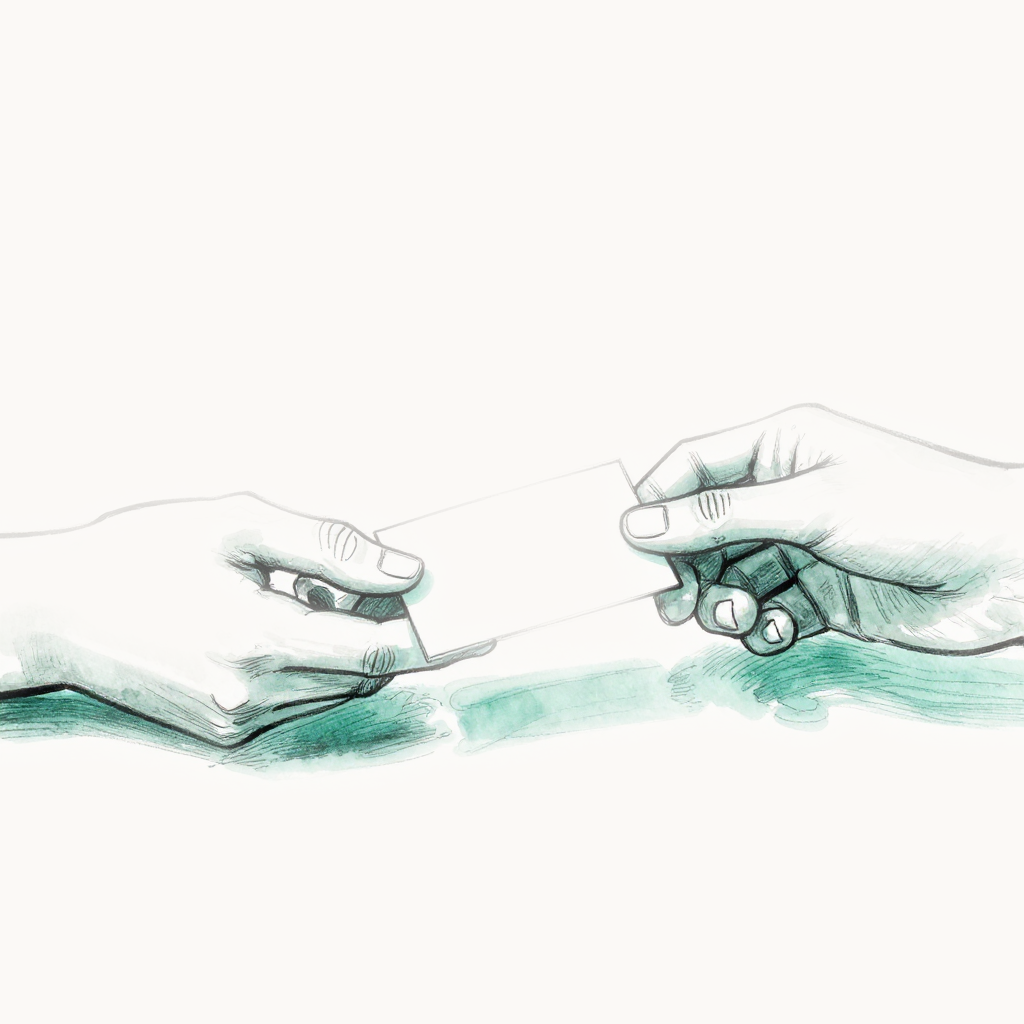
Two hands exchanging a card. The white card goes semi-transparent, blending with the oat — it looks intentional, as if the card is made of the same paper. The teal ink outlines anchor the drawing.
Diplomatic Conversation
10 minutes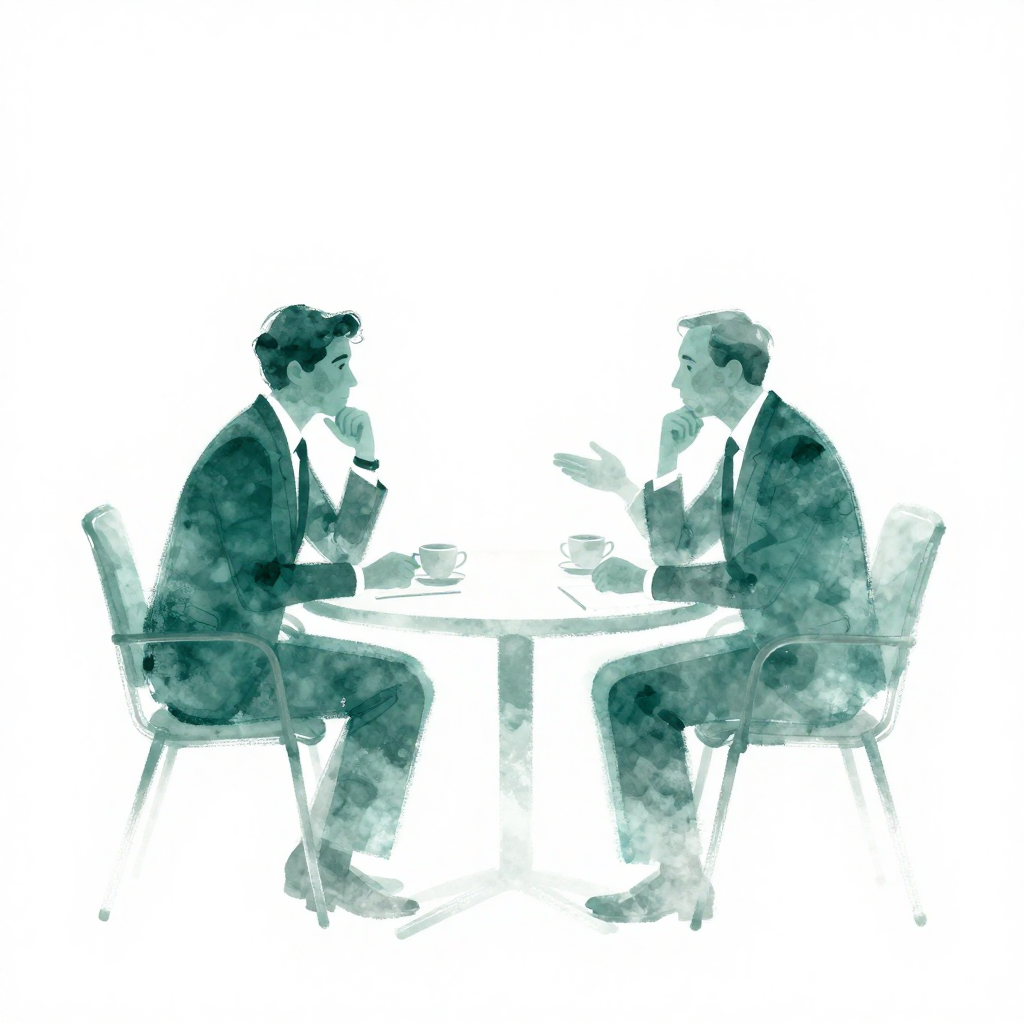
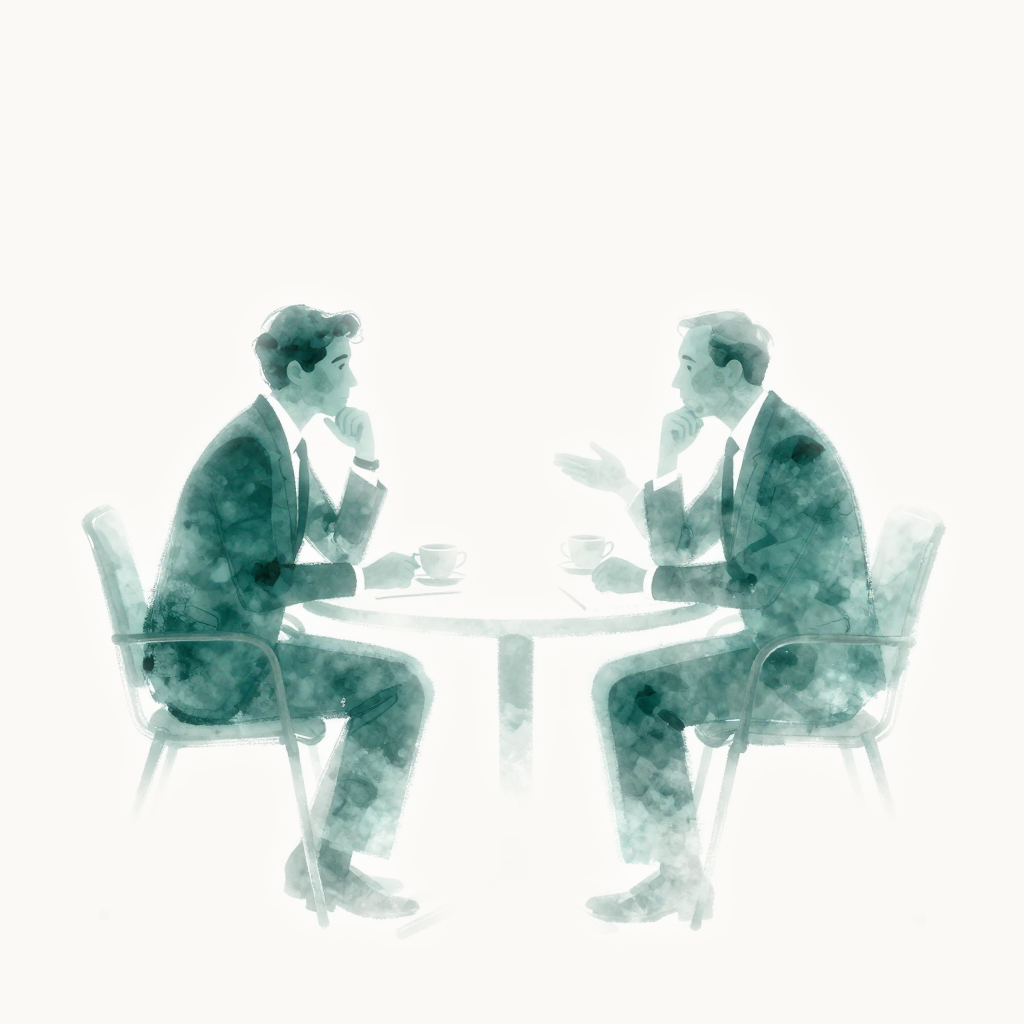
Two diplomats at a round table with tea cups. Table preserved, chairs preserved, legs preserved, cups on the table. The white between them softens into oat. This is where BiRefNet failed — it stripped the table and left cups floating in air. Edge-dissolve keeps everything.
Reception Hall
30 minutes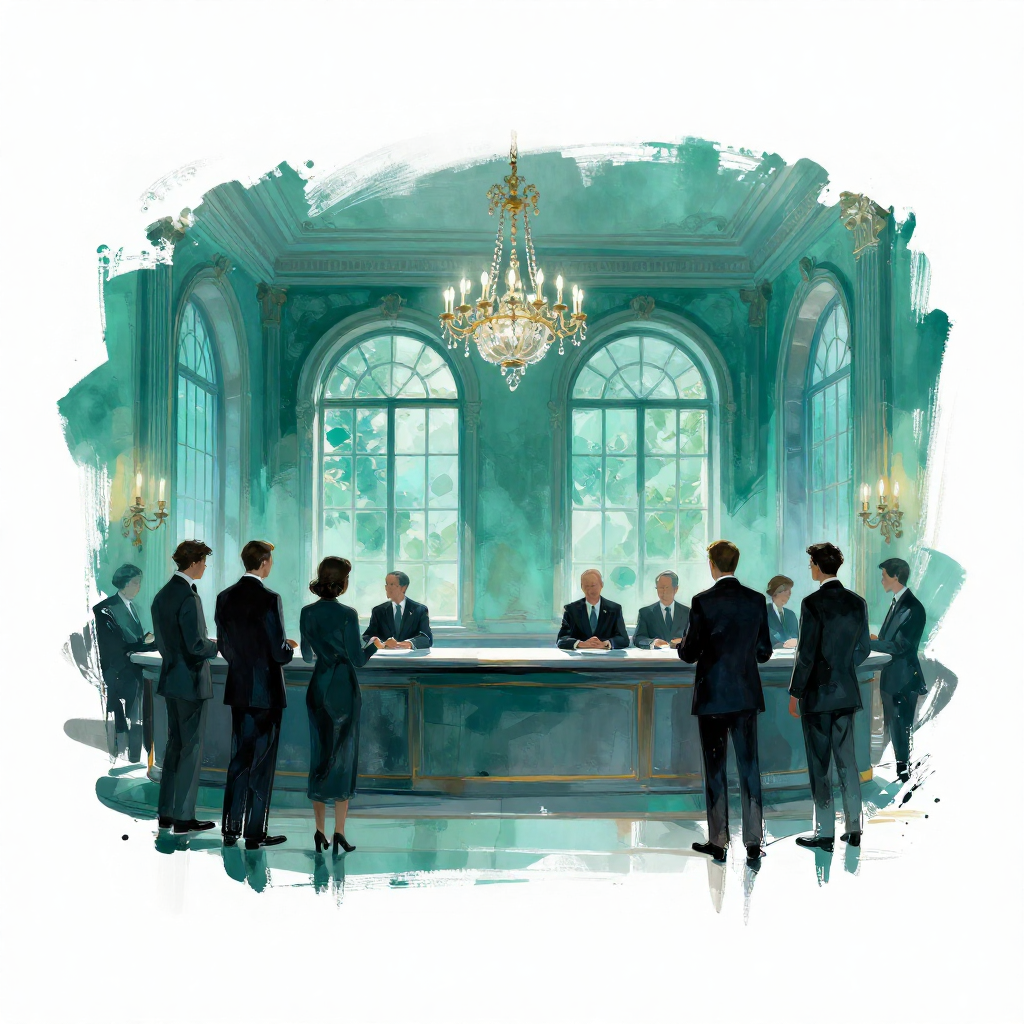
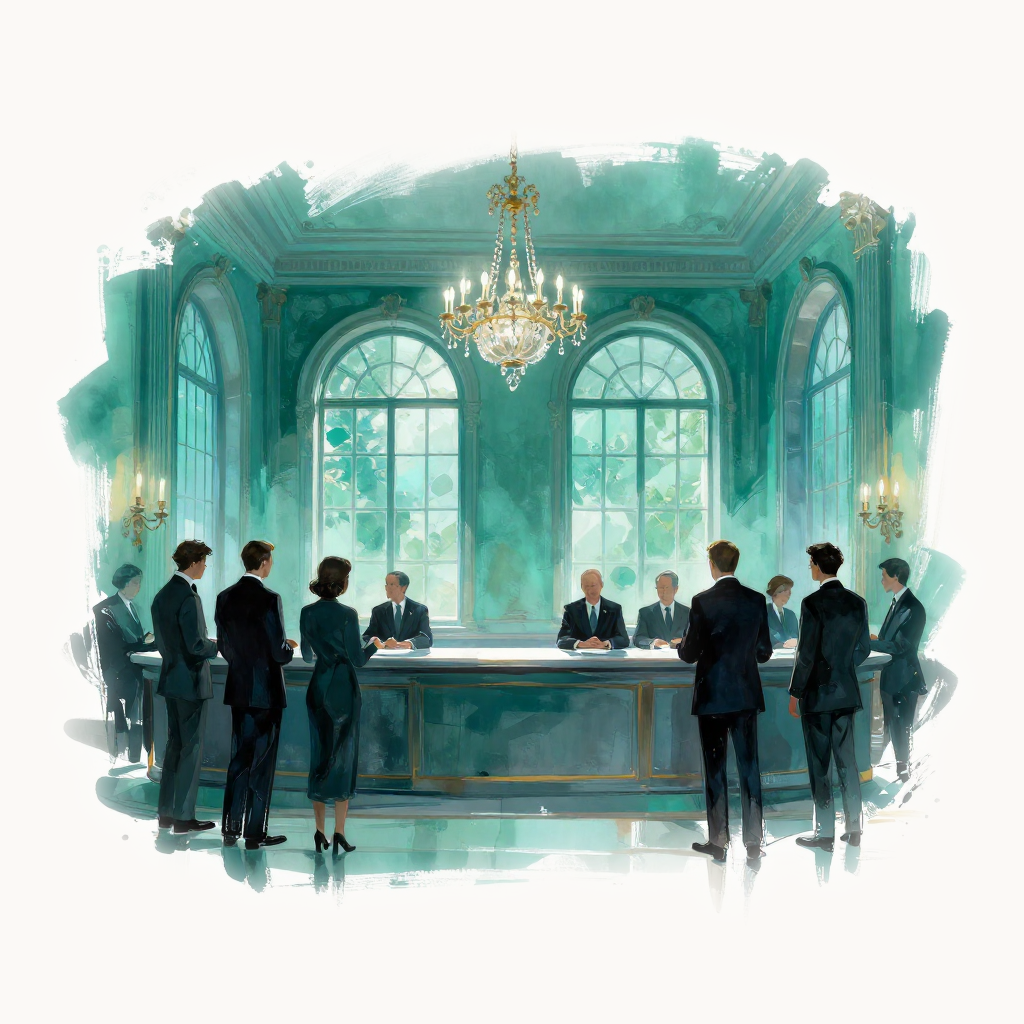
Elegant reception with arched windows, chandelier, and groups of diplomats. The brushstroke edges dissolve organically into the oat ground. The prompt asks for "rough organic brushstroke edges" — the model paints with natural watercolour margins rather than filling to the canvas edge.
Grand Summit
an afternoon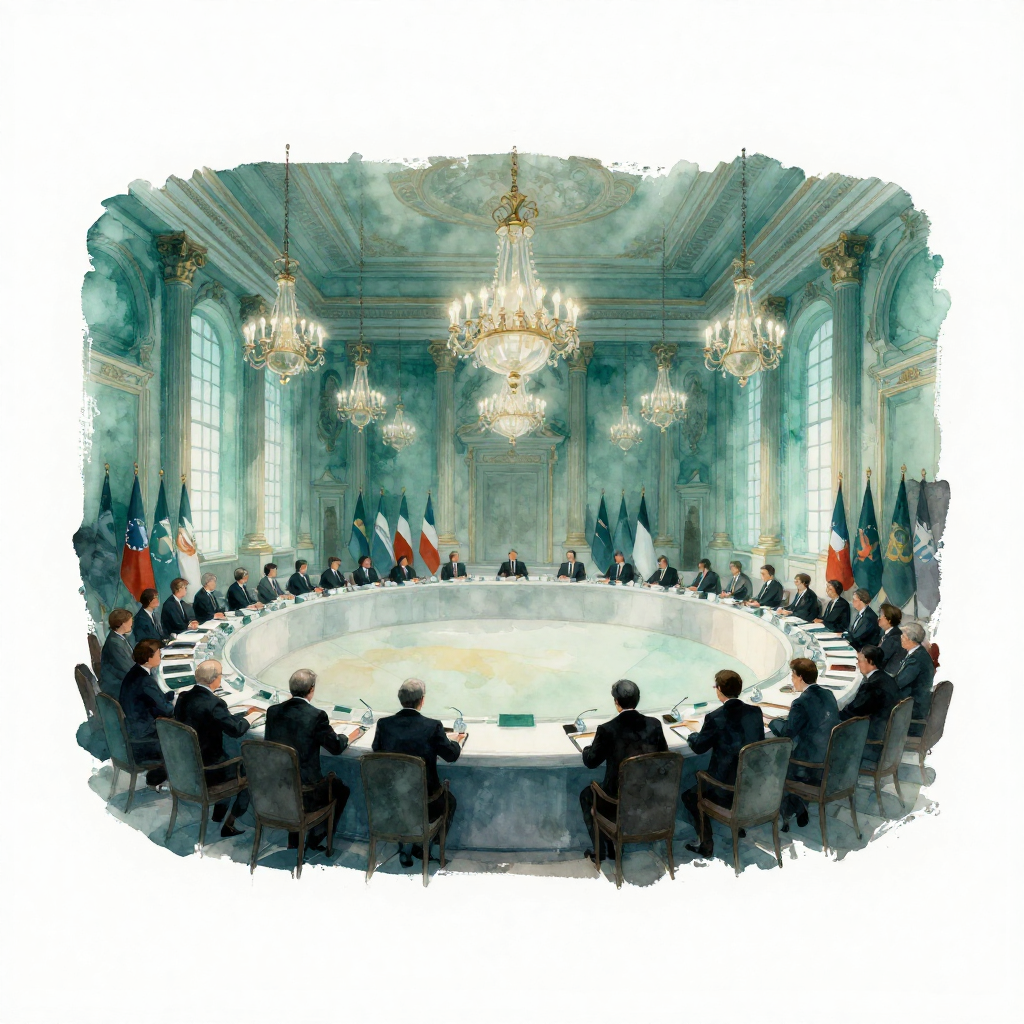
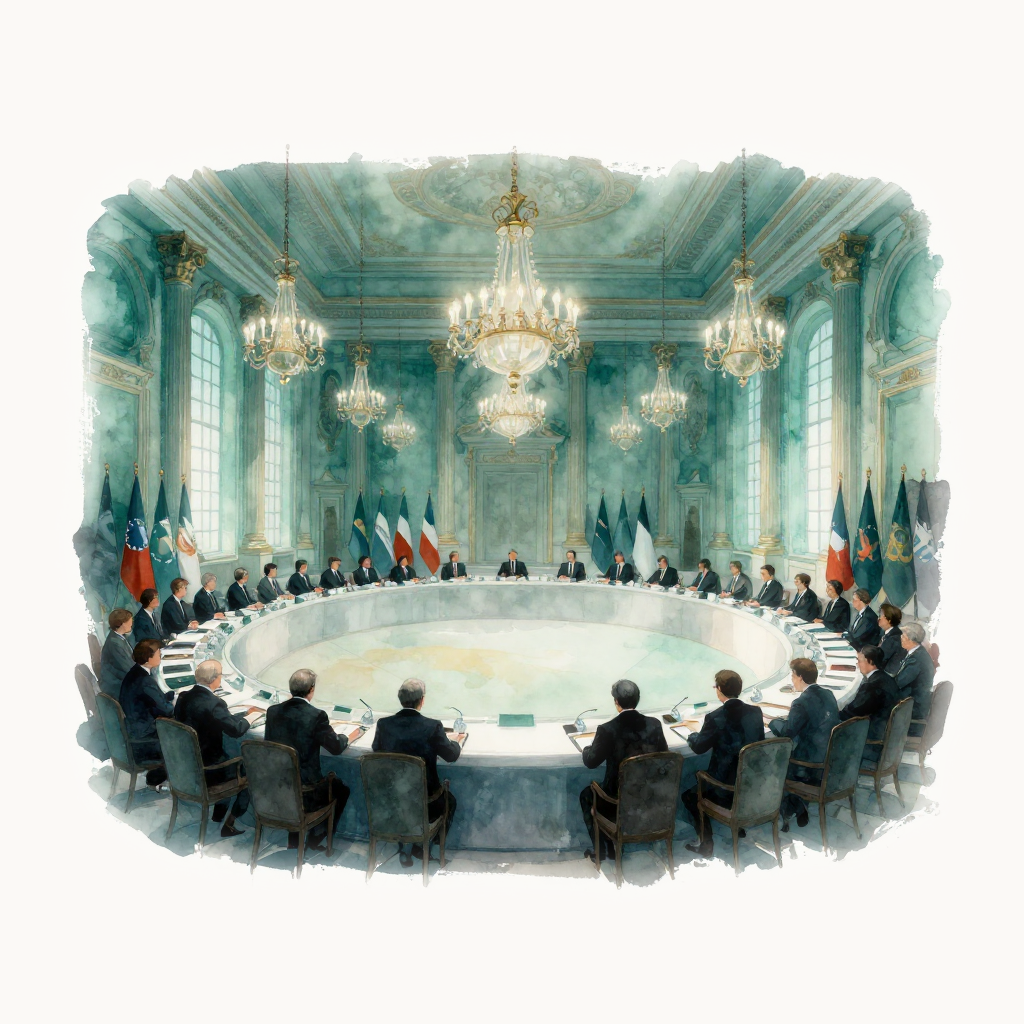
Grand summit with curved table, flags, and chandeliers. The painting emerges from the oat with painterly edges — chandeliers dissolve at the top, delegates anchor the bottom. Exhibition quality. The organic-edge prompt is critical at this level.
Key Insight
Edge-dissolve works universally because it follows the physics of real watercolour. A painting on white paper has pigment where the artist painted and bare paper everywhere else. The boundary is organic — pigment thins, washes fade, brushstrokes trail off. Converting "bare paper" to transparent and feathering the boundary reproduces exactly how a real watercolour would look if you lifted it off the page and placed it on a different surface.
The prompt addition — "rough organic brushstroke edges that fade naturally into bare white paper" — ensures the model paints with natural margins rather than filling the canvas edge-to-edge. This gives the dissolve technique white space to work with at every intensity level.
Production Workflow
Not every generated image will be perfect. The production pipeline should support a review step:
- Auto-generate on content creation (fast, cheap, $0.005)
- Author reviews — can regenerate, pick from 3–5 options
- Quality check (optional) — Claude Vision flags obvious issues before confirming: floating objects, text artefacts, colour drift
Alt Shift Lab · Visual Production System · April 2026
Z-Image-Turbo via fal.ai · Edge-dissolve via Pillow